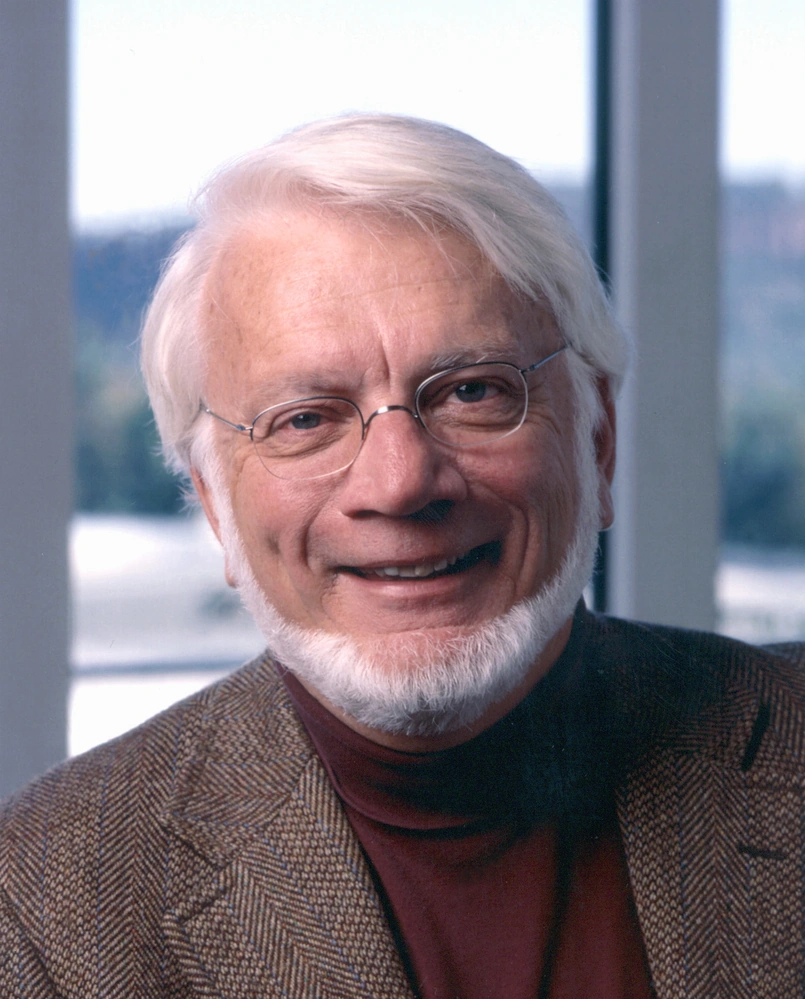
Thomas Steitz was a pioneering American scientist whose meticulous structural studies revolutionized our understanding of fundamental biological processes. Born on August 23, 1940, in Milwaukee, Wisconsin, he earned his bachelor's degree in chemistry from Lawrence College in 1962 before completing his Ph.D. in molecular biology and biochemistry at Harvard University in 1966. He furthered his expertise during formative years at the Medical Research Council Laboratory of Molecular Biology at the University of Cambridge, where he engaged with scientific luminaries including Francis Crick and Max Perutz. Steitz joined Yale University in 1970 as a chemistry professor, where he was later appointed Sterling Professor of Molecular Biophysics and Biochemistry, Yale's highest academic honor, and served as an Howard Hughes Medical Institute investigator from 1986 until his death.
Steitz's most transformative contributions involved determining the atomic structure of ribosomes using X-ray crystallography, work that earned him the 2009 Nobel Prize in Chemistry. His laboratory achieved the landmark determination of the large ribosomal subunit (50S) structure at 2.4 Å resolution, revealing the precise arrangement of RNA and protein components that enable protein synthesis. This breakthrough demonstrated why ribosomes serve as the binding site for approximately 50% of clinically used antibiotics worldwide, establishing a structural foundation for understanding antibiotic action and resistance mechanisms. His maps of ribosomal subunits provided unprecedented insights into the processes of gene expression, DNA replication, transcription, and translation, fundamentally advancing structural biology and molecular medicine.
Steitz's rigorous structural work has had profound implications for antibiotic development and combating drug-resistant bacteria, a concern he actively championed throughout his later years. He conducted critical research at the National Synchrotron Light Source at Brookhaven National Laboratory and contributed to the development of its successor facility, NSLS-II, recognizing the importance of advanced instrumentation for structural studies. As a dedicated mentor, he trained generations of structural biologists and shaped the field through his leadership in the Yale Center for Structural Biology. Thomas Steitz passed away on October 9, 2018, leaving an enduring scientific legacy that continues to inform pharmaceutical research and deepen our understanding of life's molecular machinery.