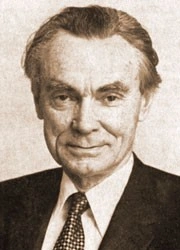
Sune K. Bergström was a pioneering Swedish biochemist whose groundbreaking research fundamentally transformed understanding of cellular regulation mechanisms. Born in Stockholm on January 10, 1916, he received his scientific education at the Karolinska Institute where he earned doctoral degrees in Medicine and Biochemistry in 1944. Following research fellowships at Columbia University and the University of Basel, he returned to Sweden to serve as Professor of Medical Chemistry at the University of Lund from 1947 to 1958. In 1958, he returned to the Karolinska Institute as Professor of Chemistry, subsequently becoming Dean of the Medical Faculty in 1963 and Rector from 1969 to 1977, establishing himself as a transformative leader in medical science education.
Bergström's seminal contribution was the successful isolation of pure prostaglandins and determination of the chemical structures of two important examples, PGE and PGF, during the 1950s. His rigorous biochemical investigations demonstrated that these hormone-like substances are formed through the conversion of unsaturated fatty acids and regulate numerous physiological processes throughout the body. This foundational work established the biochemical basis for understanding how prostaglandins influence blood pressure, kidney function, gastrointestinal protection, and every aspect of reproductive processes. The therapeutic applications of his discoveries were transformative, enabling medical use of prostaglandins to trigger childbirth contractions, induce abortions, and reduce gastric ulcer risks during pharmaceutical treatments, thereby revolutionizing multiple areas of clinical medicine.
As a distinguished scientific leader, Bergström served as Chairman of the Nobel Foundation from 1975 to 1987 and as Chairman of Medical Research at the World Health Organization from 1977 to 1982, significantly shaping global scientific policy. His commitment extended to addressing health challenges in developing countries, where prostaglandin-related drugs have been instrumental in managing tropical diseases, nutrition issues, and birth control. Honored with the Nobel Prize in Physiology or Medicine in 1982 (shared with Bengt I. Samuelsson and John R. Vane) and the Lasker Award in 1977, his scientific legacy continues to influence modern pharmacology. Bergström's work established the foundation for ongoing research into eicosanoids and inflammatory mediators, cementing his status as a visionary who bridged fundamental biochemistry with transformative medical applications until his passing in Stockholm on August 15, 2004.