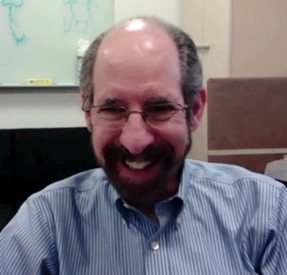
Dr. Ronald Germain is a preeminent immunologist and systems biologist at the National Institutes of Health where he serves as Chief of the Laboratory of Systems Biology and Acting Chief of the Laboratory of Immunology at the National Institute of Allergy and Infectious Diseases. He received his M.D. and Ph.D. from Harvard University in 1976, conducting doctoral research with Nobel laureate Baruj Benacerraf. After initial faculty appointments at Harvard Medical School, he joined the NIH in 1982 as a senior investigator in the Laboratory of Immunology, where he advanced to Chief of the Lymphocyte Biology Section in 1987 and Deputy Chief of the Laboratory of Immunology in 1994. His visionary leadership in immunological research has established him as one of the most influential figures in modern immunology, culminating in his designation as an NIH Distinguished Investigator and his current role as Associate Director of the Trans-NIH Center for Human Immunology.
Dr. Germain and his colleagues have made seminal contributions to our understanding of Major Histocompatibility Complex (MHC) class II molecule structure-function relationships, the cell biology of antigen processing, and the molecular basis of T cell recognition, which have fundamentally shaped contemporary immunological theory. Over the past two decades, he pioneered innovative dynamic and static in situ microscopic methods that have revolutionized how scientists study immune cell behavior in living tissues, revealing unprecedented insights into the spatial organization of immune responses. His laboratory has also been instrumental in bringing computational modeling and systems biology approaches to immunology, developing quantitative frameworks that predict immune signaling circuit behavior and have been widely adopted by researchers worldwide. With more than 400 scholarly publications, his work has transformed our understanding of how immune tissue organization governs effective host defense against diverse pathogens.
As a dedicated mentor, Dr. Germain has trained more than 70 postdoctoral fellows, many of whom now hold senior academic and administrative positions at leading institutions globally, extending his intellectual legacy throughout the scientific community. He serves on the editorial boards of numerous prestigious journals including Journal of Experimental Medicine, eLife, and Immunity, shaping the dissemination of cutting-edge immunological research. Currently, his laboratory is applying advanced imaging technologies to analyze tumor microenvironments and immune responses to viral infections including influenza and SARS-CoV-2, with emerging findings on interferon signaling and pneumocyte repair mechanisms. His ongoing work continues to bridge traditional immunology with systems approaches, maintaining his position at the forefront of efforts to understand how spatial organization within lymphoid tissues contributes to effective adaptive immunity and vaccine responses.