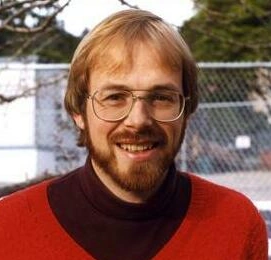
Dr. Richard Taylor was a world-renowned experimental physicist whose pioneering work fundamentally reshaped our understanding of subatomic particles. Born in Medicine Hat, Alberta in 1929, he earned his bachelor's and master's degrees from the University of Alberta before completing his PhD at Stanford University in 1962. Taylor joined the Stanford Linear Accelerator Center immediately after his doctoral studies, where he spent his entire career advancing the frontiers of particle physics. He rose to become a full professor at Stanford University in 1970 and served as Professor Emeritus at SLAC from 2003 until his passing in 2018.
Taylor's most groundbreaking contribution came through his leadership of the deep inelastic scattering experiments at SLAC in the late 1960s, where he and his collaborators Jerome Friedman and Henry Kendall directed high-energy electrons at protons and neutrons. Their meticulous measurements revealed unexpected scattering patterns that provided the first direct experimental evidence for the existence of quarks as internal constituents of protons and neutrons. This revolutionary discovery was instrumental in transforming the quark model from a theoretical construct into an experimentally verified foundation of particle physics. The team's work established critical evidence for the Standard Model and also provided early indications of the existence of gluons, the force carriers of the strong interaction.
Beyond his specific discoveries, Taylor played a pivotal role in shaping the collaborative nature of modern particle physics, helping establish the template for large-scale international research collaborations that now characterize the field. His leadership in designing and building the End Station A at SLAC created essential infrastructure that enabled numerous subsequent discoveries, including the identification of the charm quark in 1974. Taylor's legacy extends through generations of physicists he mentored and the enduring framework of experimental particle physics that his work helped establish. The Nobel Prize in Physics awarded to him, Friedman, and Kendall in 1990 stands as enduring recognition of their transformative contribution to humanity's understanding of matter's fundamental structure.