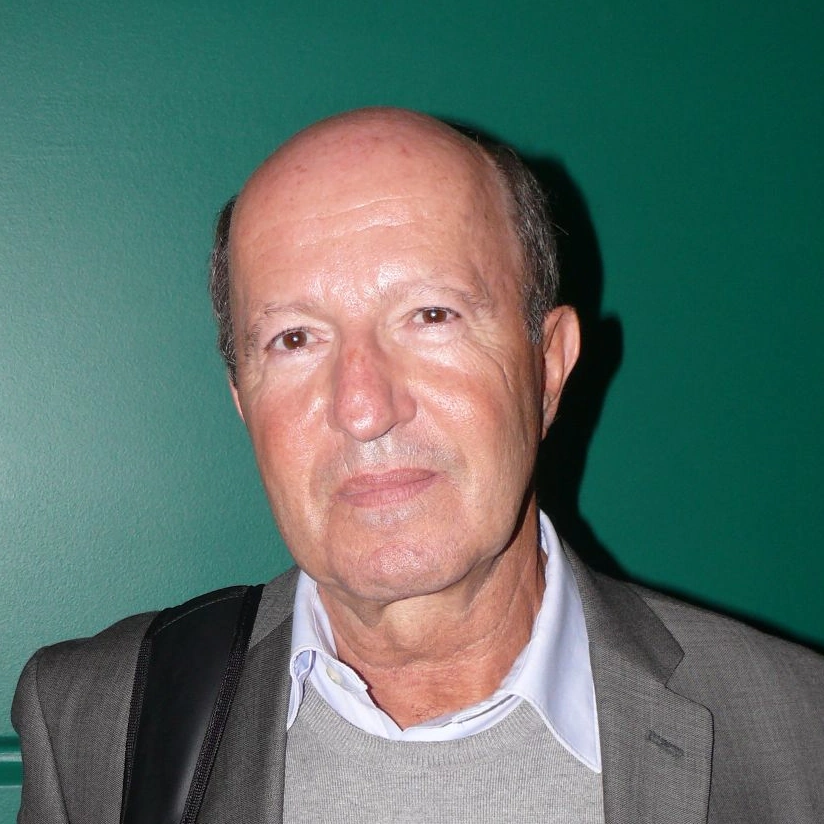
Mathias Fink stands as a preeminent French physicist whose pioneering work has profoundly shaped the understanding of wave physics in complex media. Born in Grenoble on October 18, 1945, he received his mathematical education in Paris before obtaining a Master's degree in physics of matter at Orsay University. After establishing himself through academic positions at University Louis-Pasteur and University Denis Diderot, he joined ESPCI Paris in 1990 where he created the Waves and Acoustics laboratory. Currently serving as Professor on the George Charpak chair at ESPCI Paris and formerly holding the Chair of Technological Innovation at the Collège de France, Fink has built an illustrious career spanning over five decades. His early work exploring analogies between acoustic waves, quantum mechanics, and optics laid the foundation for his groundbreaking contributions to wave physics.
Professor Fink's groundbreaking research has centered on the revolutionary concept of time reversal in wave physics, where he pioneered the iterative time reversal technique and time reversal operator concepts that fundamentally transformed imaging in complex heterogeneous media. His seminal work established novel approaches for biomedical imaging that have significantly advanced diagnostic capabilities while reducing invasive procedures in medical practice. The applications of his research extend beyond healthcare to telecommunications and non-destructive testing, demonstrating remarkable versatility across multiple technological domains. His theoretical insights into wave diffusion, coherence, and reversibility have provided unifying frameworks that continue to inspire new generations of physicists. These contributions have positioned him as a world leader in the physics of waves in complex media and their practical applications.
As the founder and former director of the Langevin Institute "Ondes & Images," which now encompasses approximately one hundred researchers, Fink has cultivated a thriving scientific community dedicated to advancing wave physics and its applications. His leadership extends to prestigious roles including membership in both the French Academy of Sciences and the Academy of Technologies, where he influences national scientific policy and priorities. Recognized with the Silver Medal and Innovation Medal of CNRS alongside his promotion to Commander in the National Order of the Legion of Honor, his contributions have been widely celebrated. Today, as Professor Emeritus at ESPCI Paris, he continues to shape the field through his ongoing research, mentorship of young scientists, and service on influential commissions such as the Innovation 2030 Commission. His legacy as a transformative figure in wave physics remains deeply embedded in both theoretical frameworks and practical technologies that benefit society.