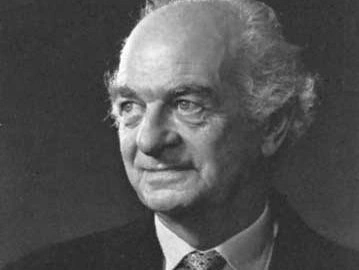
Linus Carl Pauling stands as one of the most influential scientists of the twentieth century, renowned for his foundational contributions to physical chemistry and molecular biology. Born in Portland, Oregon in 1901, he earned his bachelor's degree in chemical engineering from Oregon State University before completing his PhD in physical chemistry and mathematical physics at the California Institute of Technology in 1925. Awarded a Guggenheim Fellowship, he studied in Europe with pioneering quantum physicists including Sommerfeld, Schrödinger, and Bohr, which profoundly shaped his theoretical approach to chemical problems. By 1931, he had become a full professor at Caltech and received the American Chemical Society's Langmuir Prize as the first recipient of this award for significant work in pure science by a person under thirty. His early career established him as a visionary thinker who bridged the gap between quantum mechanics and chemical phenomena.
Pauling's groundbreaking research fundamentally transformed our understanding of chemical bonding, culminating in his seminal 1939 work The Nature of the Chemical Bond and the Structure of Molecules and Crystals, which has been cited more than 16,000 times in the three decades following its publication. His development of the concept of orbital hybridization and the electronegativity scale provided the theoretical framework for predicting molecular structures and chemical behavior, establishing the foundation for modern quantum chemistry. By applying quantum mechanics to chemical problems, he introduced innovative approaches to determining molecular structures of complex substances, including proteins, where he discovered the alpha helix configuration. For these transformative contributions that bridged theoretical principles with experimental verification, he was awarded the Nobel Prize in Chemistry in 1954, with the Royal Swedish Academy citing his research into the nature of the chemical bond and its application to elucidating molecular structures. His work represented one of the most significant theoretical syntheses in twentieth-century science, creating a comprehensive framework that connected atomic properties to macroscopic chemical behavior.
Beyond his scientific achievements, Pauling demonstrated extraordinary commitment to humanitarian causes, particularly his campaign against nuclear weapons testing which earned him the Nobel Peace Prize in 1962, making him the only person to receive two unshared Nobel Prizes in different fields. His tireless advocacy, including gathering signatures from 11,000 scientists on a petition presented to the United Nations, played a crucial role in shifting public opinion and contributed to the eventual adoption of the Nuclear Test Ban Treaty. Pauling's intellectual legacy extends across multiple disciplines, from his influential textbook General Chemistry that revolutionized chemistry education worldwide to his later work in orthomolecular medicine and vitamin research. His unique ability to integrate theoretical rigor with practical applications established him as a paradigm for interdisciplinary scientific inquiry, while his steadfast ethical principles guided both his scientific methodology and social activism. Today, Pauling's contributions continue to influence diverse fields from structural biology to science policy, cementing his status as one of the most versatile and impactful scientists in history.