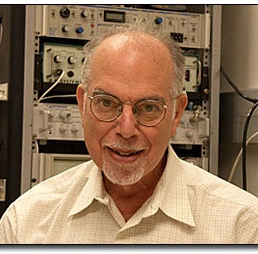
Dr. John Lisman was the distinguished Zalman Abraham Kekst Chair in Neuroscience at Brandeis University, where he maintained a lifelong academic connection spanning over five decades. A Brandeis alumnus, he earned his B.A. in physics cum laude in 1966 before pursuing a doctorate in physiology at MIT, where he conducted pioneering research on photoreception mechanisms in Limulus. Following a postdoctoral fellowship with Nobel laureate George Wald at Harvard, he returned to Brandeis as an Assistant Professor, establishing what would become a permanent academic home where he would spend virtually his entire career. Throughout his tenure, he served in numerous leadership roles including chairing the Neuroscience Program for many years, while developing an international reputation as a rigorous and innovative thinker in the field of memory research.
Dr. Lisman's groundbreaking research focused on elucidating the molecular basis of memory, a scientific quest that spanned more than thirty years and centered on the role of CaMKII in memory formation. His work combined theoretical insight with experimental validation, developing clever hypotheses about the biochemical processes underlying memory that he then rigorously tested through sophisticated experimental approaches. Colleagues noted that his belief in CaMKII's central role was partially faith-based, yet he maintained an exacting, rigorous mind that prevented him from making sloppy errors or cutting corners until he had complete proof. His research connected classroom teaching with cutting-edge science, allowing students to learn directly from a scientist who had developed many of the theories they were studying. This decades-long quest represented his commitment to doing big, bold, daring research that challenged conventional thinking in neuroscience.
Beyond his laboratory achievements, Dr. Lisman was profoundly influential as an educator who received consistent praise for his passion, engaging teaching style, and ability to connect neuroscience with broader intellectual contexts including the arts. He was a strong supporter of the arts at Brandeis, serving on the faculty advisory committee for the Leonard Bernstein Festival of the Creative Arts and taking students to the Rose Art Museum to explore connections between art and memory. Even while battling cancer, he maintained his intellectual vigor, delivering his final scientific lecture via Skype from his ICU bed at Sloan Kettering, which colleagues described as the very best talk he had ever given. His passionate connection with life, art, and science endured until his passing on October 20, 2017, leaving a lasting legacy that continues to inspire students, colleagues, and the broader neuroscience community worldwide.