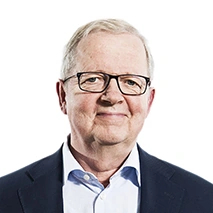
Jens Nørskov is a preeminent theoretical physicist renowned for his transformative contributions to computational surface science and catalysis. He currently serves as the Villum Kann Rasmussen Professor at the Technical University of Denmark, having returned to DTU in 2018 after a distinguished tenure at Stanford University where he held the Leland T. Edwards Professorship in the School of Engineering. Nørskov earned his PhD in theoretical physics from Aarhus University in 1979 under Bengt Lundqvist's supervision, following his M.Sc. in physics and chemistry from the same institution in 1976. His career trajectory spans postdoctoral positions at IBM's T.J. Watson Research Center and the Nordic Institute for Theoretical Physics, industrial research at Haldor Topsøe, and academic leadership at DTU where he established multiple research centers including the Center for Atomic-scale Materials Physics.
Professor Nørskov pioneered theoretical frameworks that revolutionized the computational prediction of surface reactivity and catalytic processes, with his seminal 2000 paper 'Theoretical surface science and catalysis—calculations and concepts' becoming a cornerstone reference in the field. His development of density functional theory approaches for predicting adsorption energies has enabled the rational design of catalysts for sustainable energy applications, shifting the discipline from empirical methods to predictive science. This foundational work has generated extraordinary impact, with his approximately 325 publications cited more than 17,000 times, and his conceptual frameworks widely adopted across academic and industrial research laboratories worldwide. His theoretical insights have directly advanced heterogeneous catalysis, electrocatalysis, and materials design, resulting in ten patents that bridge fundamental science with practical energy technologies.
Beyond his research achievements, Nørskov has shaped the global materials science community through his leadership of major initiatives including the Lundbeck Foundation's Center for Atomic-scale Materials Design at DTU and the SUNCAT Center for Interface Science and Catalysis at Stanford University. His current role as chairman of the Danish National Research Foundation positions him to influence national scientific priorities while maintaining his industrial connection as a board member of Haldor Topsøe. Nørskov has mentored generations of researchers who now lead their own successful careers in computational catalysis, creating an enduring intellectual legacy that continues to expand the frontiers of theoretical surface science. His ongoing research focuses on accelerating the discovery of sustainable energy solutions through advanced computational methods, particularly in green hydrogen production, carbon capture technologies, and next-generation battery chemistry, ensuring his continued impact on addressing humanity's most pressing energy challenges.