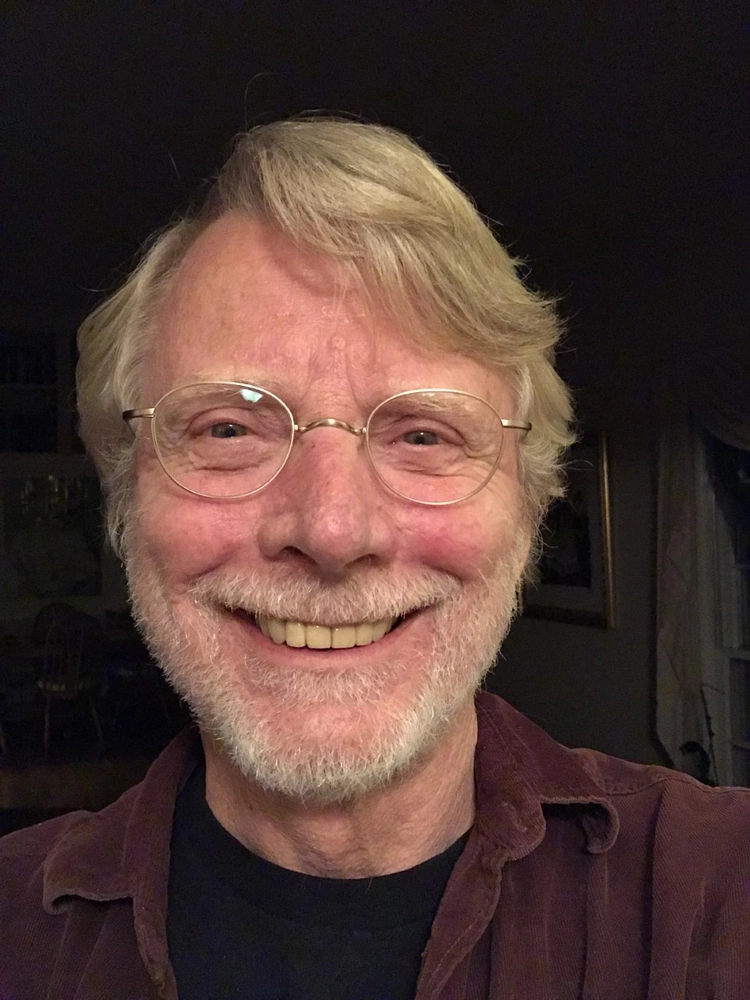
Gordon Logan is a preeminent cognitive psychologist whose theoretical and empirical contributions have profoundly shaped the understanding of human cognition and performance. He currently holds the distinguished position of Centennial Professor of Psychology at Vanderbilt University, a role he has occupied since 2000 as a Centennial Chair. Logan earned his BA and MSc from the University of Alberta in 1969 and 1972, followed by his PhD from McGill University in 1975. Prior to joining Vanderbilt, he held faculty positions at several prestigious institutions including Queen's University, University of Waterloo, University of Toronto, University of British Columbia, Purdue University, and the University of Illinois at Urbana-Champaign. His extensive academic journey across major North American universities has established him as a leading authority in experimental psychology.
Logan pioneered the influential stop-signal paradigm, a groundbreaking methodology that measures the ability to inhibit ongoing actions, which has become a standard tool for studying cognitive control in both typical and clinical populations. His development of the instance theory of automatization revolutionized understanding of how repetitive cognitive tasks become automated through the storage and retrieval of task instances rather than through procedural transformation. According to Google Scholar, Logan's work has accumulated over 33,000 citations with an h-index of 86 as of 2017, demonstrating the substantial impact of his theoretical frameworks across psychology and neuroscience. His research has provided critical insights into attention deficits in ADHD, the hierarchical control of skilled behaviors like typing, and the fundamental processing limitations of the human brain. These theoretical contributions have enabled researchers to develop more precise models of cognitive functioning and have informed interventions for individuals with executive function disorders.
As editor-in-chief of Cognitive Psychology, Logan has significantly shaped the direction of research in his field through his editorial leadership and scholarly guidance. His election as an International Member of the National Academy of Sciences in 2019 represents one of the highest honors in American science, recognizing his exceptional contributions to psychological and cognitive sciences. Logan has received numerous accolades including the Distinguished Scientific Contribution Award from the American Psychological Association in 2017 and membership in the American Academy of Arts and Sciences in 2016. His research legacy endures through his extensive publication record and ongoing investigations that integrate mathematical modeling with neural and behavioral data to further elucidate the mechanisms of cognitive control and skilled performance. Through his mentorship and collaborative research, Logan has cultivated a new generation of cognitive scientists who continue to advance our understanding of the human mind.