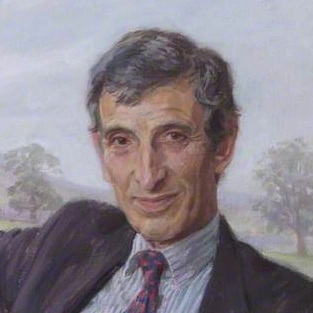
Sir George Alberti stands as a preeminent figure in metabolic medicine and clinical biochemistry with a distinguished career spanning over five decades. Born in Koblenz, Germany in 1938, he fled Nazi persecution with his family and ultimately pursued medical training at Balliol College, Oxford, where he earned his DPhil in 1964 and medical degree in 1965. He established his academic foundation through research positions at Harvard University and Oxford before assuming his first professorship at the University of Southampton in 1973 as Professor of Chemical Pathology and Human Metabolism. His subsequent appointments included professorships at the University of Newcastle upon Tyne where he served as Dean of Medicine from 1995 to 1997 and as President of the Royal College of Physicians from 1997 to 2002.
Professor Alberti's most enduring scientific contribution emerged in the 1970s when he developed the systematic approach to managing diabetic ketoacidosis, now universally recognized as the 'Alberti regime.' This evidence-based protocol rationalized the administration of insulin and fluid therapy for this life-threatening metabolic emergency, dramatically improving patient outcomes and establishing the global standard of care for generations of clinicians. His work transformed what was previously an inconsistent, often fatal condition into a treatable emergency with predictable recovery pathways. Beyond this landmark achievement, his research significantly advanced the understanding of metabolic pathways and their clinical implications in critical care settings, laying foundational principles for modern metabolic medicine as a distinct clinical specialty.
His leadership extended far beyond laboratory research as he served as National Clinical Director for Emergency Access from 2002 to 2009, where he implemented evidence-based reforms to the UK's emergency healthcare system despite considerable controversy. Professor Alberti continues to influence medical education and healthcare policy as Senior Research Investigator at Imperial College London, mentoring the next generation of metabolic specialists and contributing to scholarly discourse. His legacy encompasses not only his specific clinical protocols but also his systematic approach to translating biochemical principles into practical clinical applications that have saved countless lives worldwide. The enduring impact of his work remains evident in daily clinical practice across emergency departments and diabetes care centers globally.