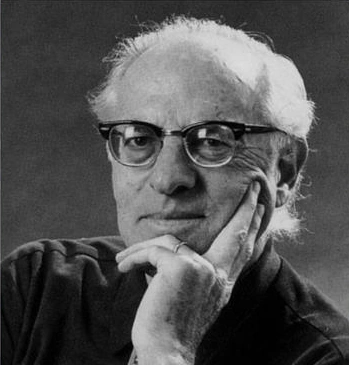
Frederick Reines was a preeminent American particle physicist whose groundbreaking work fundamentally reshaped our understanding of fundamental particles and their interactions. Born on March 16, 1918, in Paterson, New Jersey, to Eastern European Jewish immigrant parents, he demonstrated exceptional academic promise from an early age. He earned his undergraduate and graduate degrees from Stevens Institute of Technology before completing his Ph.D. in physics at New York University in 1944. His doctoral research on nuclear fission caught the attention of Richard Feynman, leading to his recruitment for the top-secret Manhattan Project at Los Alamos National Laboratory during World War II, where he worked in the Theoretical Division under Hans Bethe.
Reines achieved scientific immortality through his co-discovery of the neutrino with colleague Clyde Cowan in 1956, confirming the existence of this elusive elementary particle first proposed by Wolfgang Pauli in 1930. Their ingenious experimental design at the Hanford nuclear facility demonstrated the neutrino's existence through the detection of photons created when neutrinos interacted with protons, overcoming widespread skepticism that the particle was too small and neutral to ever be detected. This landmark achievement, for which he received the 1995 Nobel Prize in Physics, opened an entirely new field of particle physics research and laid the foundation for neutrino astronomy. Subsequent work by Reines and his team at Case Western Reserve University led to the first detection of atmospheric neutrinos produced by cosmic rays and, decades later in 1987, the observation of neutrinos from Supernova SN1987A, which inaugurated the field of neutrino astronomy.
Throughout his distinguished career, Reines held significant academic leadership positions including chairman of the Physics Department at Case Western Reserve University and founding dean of the Physical Sciences Department at the University of California, Irvine, where he established a renowned research program in neutrino physics. He mentored numerous graduate students and pioneered the development of innovative detector techniques, including large liquid scintillator and water Cherenkov detectors, which became standard tools in neutrino research. His work extended beyond particle physics into diverse areas such as gamma-ray astronomy, testing fundamental physics principles, and developing medical radiation detectors for cancer therapy. Though Reines passed away in 1998, his legacy endures through the continued exploration of neutrino properties, which remains at the forefront of particle physics research and has profound implications for understanding stellar processes, the universe's evolution, and the fundamental laws governing matter.