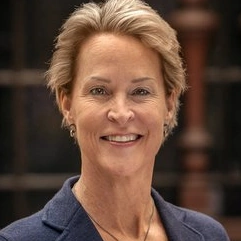
Frances Arnold stands as a preeminent chemical engineer whose innovative work has revolutionized the field of biochemistry and molecular engineering. She currently holds the distinguished position of Linus Pauling Professor of Chemical Engineering, Bioengineering, and Biochemistry at the California Institute of Technology, where she has been a faculty member since 1986. Arnold earned her bachelor's degree in mechanical and aerospace engineering from Princeton University in 1979 before obtaining her doctorate in chemical engineering from the University of California, Berkeley in 1985. Her career path exemplifies remarkable interdisciplinary breadth, beginning with work in alternative energy at the Solar Energy Research Institute and including professional experience in Brazil and South Korea before transitioning to bioengineering. Beyond her academic leadership, Arnold has made significant contributions to science policy, serving as co-chair of President Biden's Council of Advisors on Science and Technology since 2021 and joining Alphabet Inc.'s board of directors in 2019.
Arnold's groundbreaking contributions to science center on her development of directed evolution, a methodology that harnesses natural evolutionary processes to engineer enzymes with novel and enhanced properties. Her seminal 1993 paper demonstrated how error-prone PCR could introduce random mutations into bacterial DNA, enabling the directed evolution of the enzyme subtilisin E to function in organic solvents rather than its natural aqueous environment. This revolutionary approach has transformed the practice of chemistry by creating custom enzymes for applications ranging from pharmaceutical manufacturing to sustainable energy production and environmentally friendly agricultural processes. Arnold's techniques have enabled scientists to bypass the limitations of traditional rational design methods by allowing evolution to solve complex protein engineering challenges that had previously stymied researchers. Her work has established a powerful paradigm that treats enzymes not as static entities but as malleable components that can be adapted to perform virtually any chemical transformation under diverse conditions.
As a thought leader in biocatalysis and sustainable chemistry, Arnold has profoundly influenced both academic research and industrial applications through her entrepreneurial ventures and scientific leadership. She co-founded the biofuel company Gevo and established Provivi to develop green biocatalytic processes for agriculture, demonstrating her commitment to translating fundamental research into practical solutions for global challenges. Arnold's influence extends beyond the laboratory through her mentorship of generations of scientists and her role in shaping national science policy through high-level advisory positions. Her distinctive approach to scientific inquiry—characterized by bold questioning of conventional wisdom and persistence in the face of skepticism—has inspired countless researchers to pursue unconventional paths in biomolecular engineering. Today, Arnold continues to advance the frontiers of directed evolution while advocating for innovative approaches to harnessing biological systems for sustainable chemical manufacturing and environmental protection.