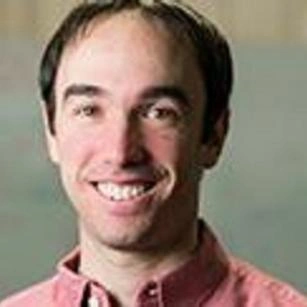
Dr. David Sontag is a pioneering computer scientist whose work bridges artificial intelligence and healthcare innovation. He currently holds the position of Professor of Electrical Engineering and Computer Science at MIT, where he serves as the von Helmholtz Professor in the Institute for Medical Engineering and Science and leads a research group within the Computer Science and Artificial Intelligence Laboratory. Previously, he was an Assistant Professor of Computer Science and Data Science at New York University's Courant Institute from 2011 to 2016, following a postdoctoral fellowship at Microsoft Research New England. His academic journey began with a Bachelor's degree in Computer Science from the University of California, Berkeley, and culminated in a Ph.D. from the Massachusetts Institute of Technology where he received the prestigious Sprowls award for outstanding doctoral research.
Professor Sontag's research has fundamentally transformed the application of machine learning in clinical settings through the development of novel algorithms for disease progression modeling, electronic phenotyping, and clinical decision support systems. His work on early detection of Type 2 diabetes and emergency department decision tools has established new methodologies for leveraging unstructured health data, with multiple best paper awards at premier conferences including Neural Information Processing Systems and Uncertainty in Artificial Intelligence. These contributions have earned him significant recognition including the NSF CAREER Award and faculty honors from major technology companies, while his practical innovations directly address critical challenges in healthcare delivery through rigorous computational approaches.
Beyond his technical contributions, Dr. Sontag has emerged as a central figure in building the clinical machine learning community through his leadership in collaborative initiatives like OHDSI and his role as co-founder of Layer Health, where he translates research into real-world applications. His research group at MIT consistently produces influential work that shapes the direction of AI in medicine, with strong emphasis on interpretability and clinician-centered design. As both an educator training the next generation of computational healthcare researchers and an active entrepreneur, he continues to advance the frontier of machine learning applications in medicine while maintaining rigorous scientific standards. His current work focuses on developing trustworthy AI systems capable of transforming healthcare delivery through precise, data-driven clinical interventions.