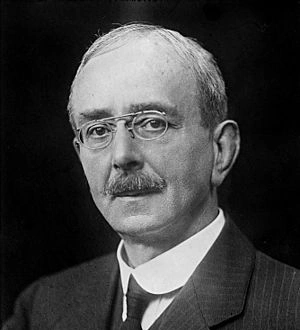
Sir Charles Scott Sherrington stands as a towering figure in the history of neuroscience and physiology whose pioneering work transformed our understanding of the nervous system. Born in London on November 27, 1857, he established his scientific career after obtaining his medical qualifications in 1886, demonstrating exceptional promise from the outset. His academic journey took him through prestigious institutions including the University of London, where he served from 1891 to 1895, followed by the University of Liverpool, where he was appointed Professor of Physiology in 1895 and conducted groundbreaking research on nerve functions. In 1913, he achieved his professional pinnacle when he was appointed to the distinguished Waynflete Chair of Physiology at Oxford University, a position he held until his retirement in 1936, cementing his legacy as one of Britain's most eminent scientific minds.
Sherrington's most profound contribution was his elucidation of the functional organization of the nervous system, particularly through his discovery of the different functions neurons play and the mechanisms by which they communicate. His seminal 1906 work, The Integrative Action of the Nervous System, established the neuron doctrine and introduced the concept of proprioception, fundamentally reshaping neurological understanding. He coined the critical terms synapse to describe the junction between neurons and discovered the principle of reciprocal innervation, now known as Sherrington's Law, which states that activation of muscles is accompanied by simultaneous inhibition of opposing muscles. This comprehensive framework for understanding nervous integration earned him the Nobel Prize in Physiology or Medicine in 1932, which he shared with Edgar Douglas Adrian, recognizing their collective discoveries regarding the functions of neurons that laid the cornerstone of modern neuroscience.
Beyond his experimental discoveries, Sherrington's influence extended through his exceptional mentorship, training a generation of scientists that included Nobel laureates Ragnar Granit, Sir John Eccles, and Howard Florey, as well as pioneering neurosurgeon Harvey Williams Cushing. His philosophical explorations culminated in the 1940 publication Man on His Nature, based on his Gifford lectures, which examined consciousness and natural theology with remarkable intellectual depth. Honored with the highest distinctions including the Copley Medal, the Order of Merit, and knighthood in 1922, Sherrington's legacy endures as the foundational framework for contemporary neuroscience research worldwide. Even after his death on March 4, 1952, his conceptual framework continues to guide researchers in understanding the intricate workings of the nervous system, ensuring his place among the most influential scientists of the twentieth century.